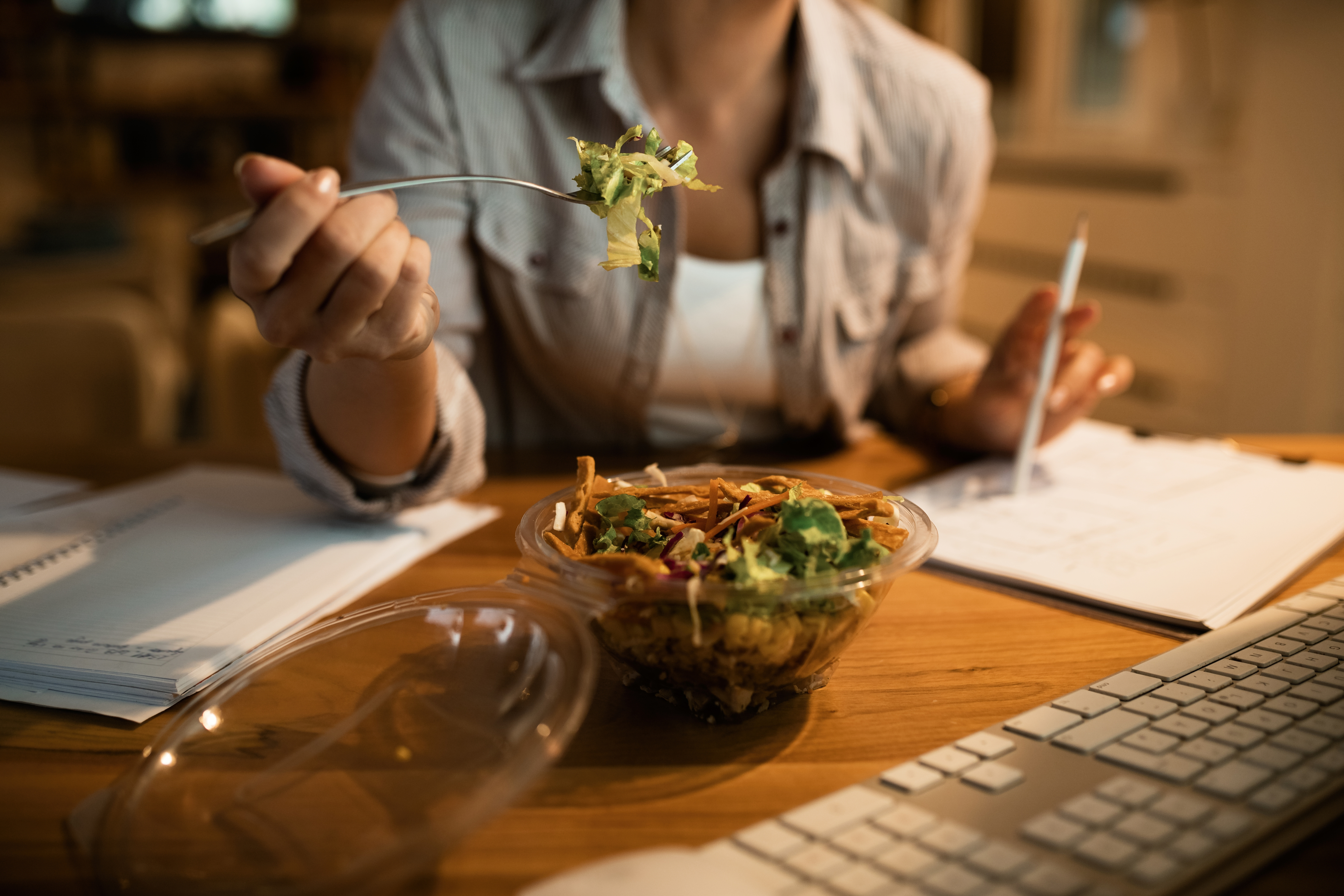
Most food advice for cycle syncing reads like a meal prep guide for someone with a lot of free time. Specific recipes for each phase, a different supplement stack every week, a shopping list that changes every seven days.
That's not how most women eat. And it doesn't have to be that complicated.
The useful version of food and cycle syncing isn't about following a new diet. It's about noticing what your body seems to want at different points in the month — and not fighting it quite so hard.
What the research actually says
The science here is honest about its own limits. Research on how the menstrual cycle affects dietary intake is still developing — women have historically been underrepresented in nutritional studies, and most existing data looks at single time points rather than tracking the same woman across her full cycle.
What some studies do suggest: appetite and energy needs may shift across the month. A 2025 meta-analysis found that energy intake tends to differ between the follicular and luteal phases — meaning the week before your period, many women naturally eat more. Not because of lack of willpower. Because their body is asking for more.
A 2024 systematic review concluded that certain nutritional practices may help reduce cycle-related symptoms — but noted there's no current consensus on which foods are sufficiently evidenced to promote broadly, and recommended treating each person's symptoms individually.
In other words: the patterns are real. The prescriptions aren't one-size-fits-all. Which is exactly why tracking your own data matters more than following someone else's protocol.
The first half of your cycle: lighter and easier
In the weeks after your period, many women report that food feels less complicated. Appetite tends to be lower, digestion feels easier, and the pull toward heavy or sweet foods is quieter.
Some research suggests this phase may be a good time to notice how different foods affect your focus and energy — not because your body is more "receptive" in some mystical sense, but simply because you're less likely to be dealing with cravings or discomfort that cloud the signal.
For working women, this often translates to: you can eat a lighter lunch and still focus through the afternoon. You don't need as much to feel steady.
The week before your period: more, and that's fine
The luteal phase — roughly the ten days before your period — is where most food-related guilt tends to live. The cravings. The hunger that feels disproportionate. The chocolate at 3pm that you didn't plan for.
Some research suggests that resting metabolic rate may be slightly higher in the luteal phase, which could partly explain increased appetite. Your body is doing more. It may need more.
The more useful reframe for working women isn't "how do I resist this" but "what can I eat that will actually sustain me through the afternoon without a crash." Protein and complex carbohydrates tend to be more stabilising than sugar, which matters more when your baseline is already lower.
The craving itself isn't the problem. Ignoring it until you're running on empty and then grabbing whatever's closest — that's what actually disrupts your focus day.
What actually works for a normal week
Not a phase-by-phase meal plan. Just three shifts that most women can actually maintain:
Notice the pattern before you change anything. For two months, log one word about food each day: good, rushed, didn't care. After two months, you'll probably see that certain weeks you naturally eat better — and certain weeks the wheels fall off. That's your baseline. Work with it, not against it.
Don't skip meals in your high-demand weeks. The weeks with back-to-back meetings and deadlines are usually the weeks food falls apart. That's also when your body may need more. A meal that takes five minutes still counts.
Take the craving seriously enough to feed it properly. The 3pm crash before your period isn't a willpower failure. It's your body asking for fuel. A piece of fruit and some protein will carry you further than ignoring it until dinner.
The point
You don't need a new diet for each phase of your cycle. You need enough self-knowledge to stop being surprised by what your body wants — and to stop treating its signals as obstacles.
That's what tracking is for. Not to optimise. To understand.
Anima is being built to help you see those patterns over time — food, energy, focus, all in one place — so the connections that are hard to spot week by week become visible across the month. More on that soon.